
Inshore charters
Inshore Fishing Charter Bradenton
The flats, bays and mangroves of the Manatee River and lower Tampa Bay. Light tackle, shallow water and the three fish this coast is known for. Year-round.
From $425 for three hours · priced per boat, not per person · six anglers maximum
The fish
Snook, redfish and spotted seatrout.
The water
Flats, bays and mangrove shorelines on the Manatee River and lower Tampa Bay.
The season
Year-round.


On the flats
How an Inshore Fishing Charter in Bradenton Works
Most inshore days start the same way. The boat idles away from the dock, the river opens up, and a few minutes later the engines are off and someone is making the first cast. Fishing close to home is the point. The snook, redfish and trout that make an inshore fishing charter in Bradenton worth booking live here all year, and they’re rarely more than a short run away.
Captain Charlie Tita grew up on Tampa Bay. After more than 35 years on this water he can tell you which shoreline fishes on a falling tide and which oyster bar the reds cross early in the day. That kind of knowledge doesn’t come off a chart.
Reading the water
Inshore fishing is mostly about the tide. Moving water pushes shrimp and small fish along the mangroves and over the grass, and the fish set up to wait for it. Slack water is often quiet. So the plan for the morning follows the tide chart more than the clock.
Wind matters too. A stiff breeze can muddy one shoreline and leave the next one clear and fishable. Charlie picks the side that’s fishing, and changes his mind if it stops. Trips leave from 801 Riverside Dr E, on the Manatee River, so the first decision is usually upriver or down.
On the flats, under the mangroves
On open flats the boat drifts or sits quietly on the Power Pole Move trolling motor while you cast ahead of moving fish. Along the mangroves it’s closer work. The best casts land a foot from the roots. A bait that lands three feet out is often ignored.
Docks and bridges fish differently again. Baits go in tight to the pilings and the current carries them down to fish holding in the shade. Over a few hours you’ll usually try a bit of everything, with short hops in between.
Three fish worth knowing
Snook are the ones people talk about afterwards. They hit hard and head straight for the nearest root.
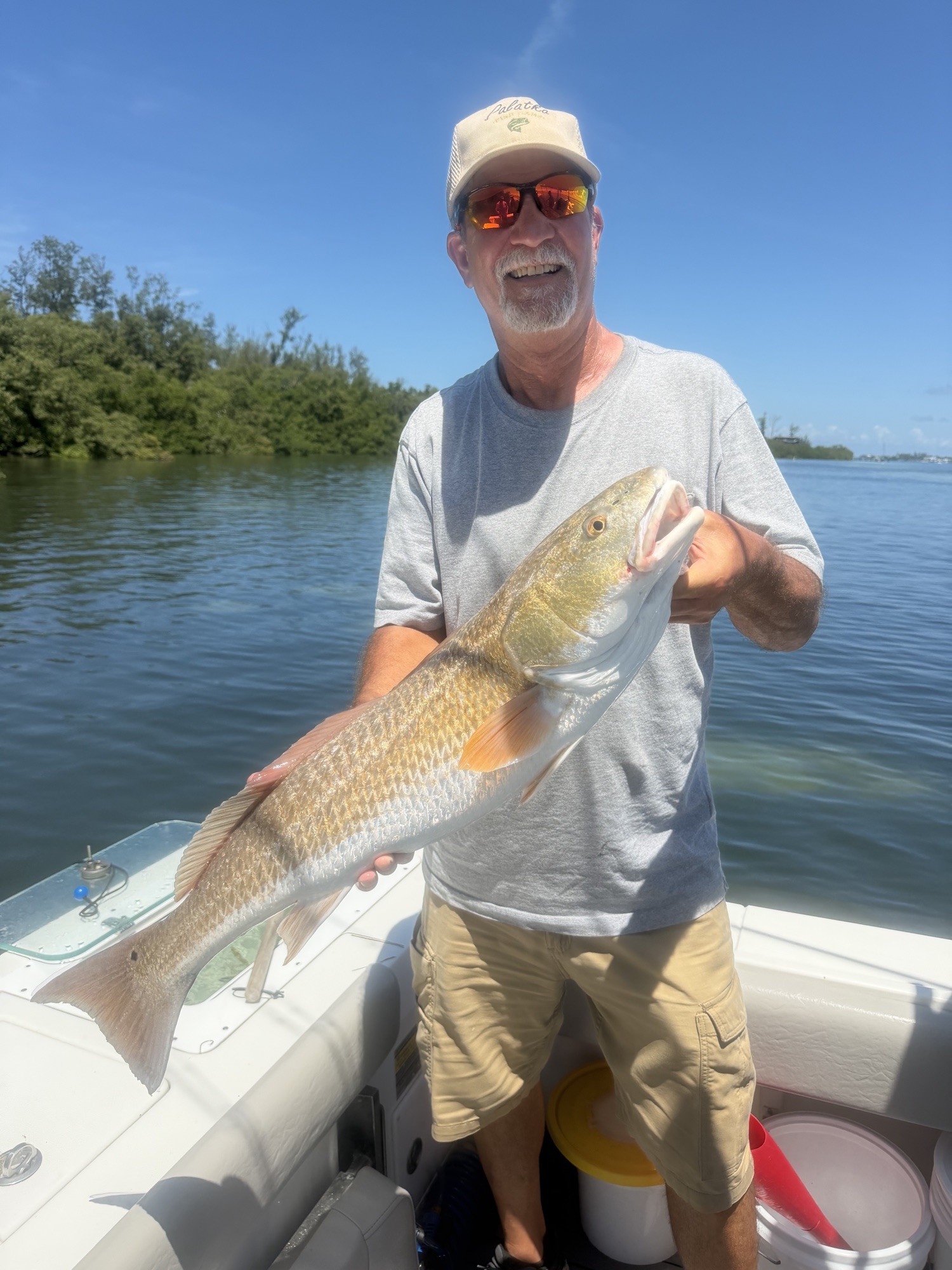
Redfish are steadier. They root around on the grass and oyster bars for crabs and shrimp, and on a calm morning you can sometimes see their tails breaking the surface.
Spotted seatrout keep a slow day busy. They tend to feed in loose groups over deeper grass, which makes them a good first fish for anyone new to it. Sheepshead and mangrove snapper turn up around structure as well, depending on the time of year.
Through the year
Spring warms the water and the fish feed hard after winter. Summer is about early starts, before the heat and the afternoon storms. Autumn brings thick bait and some of the best fishing of the year. In winter, snook and redfish slide back into the river and the deeper creeks, and a calm, sunny afternoon can still produce.
Each season has its own rhythm. If you’re curious, ask what’s been biting the week before your trip, and you’ll get a straight answer about what to expect.
Pitched at your level
The boat is yours, so the day can be set up for the people on it. A family with young children might fish live shrimp under a float and catch trout after trout. Two experienced anglers might spend the same morning throwing lures at tailing reds. Same water. Very different days.
If your group has never fished, that’s normal. Plenty of guests catch their first fish ever on these flats.
A few small things
Bring polarised sunglasses if you own a pair. They cut the glare and let you see what Charlie is pointing at: a sand hole, a push of water, a fish. A hat helps, and so does a light layer for the ride back.
Can’t decide between the bays and the Gulf? Our guide to inshore or nearshore fishing sets out how the two compare.
What a morning might look like
Say you book four hours on a summer morning with an incoming tide. You might start on a grass flat near the river mouth while the water is still cool, casting to redfish pushing along the edge. As the tide rises the fish slide up into the mangroves, so the boat follows them. By mid-morning, with the sun high, a shady dock or bridge piling often holds snook that won’t show anywhere else.
None of that is fixed. If the reds aren’t on the flat, Charlie won’t sit and wait for them. That flexibility is the real advantage of a private trip on home water.
Before you book
How long should an inshore trip be?
Three or four hours covers a good stretch of tide and several spots. Six or eight gives time for both tides, or a stop at Egmont Key.
Is it worth going in winter?
Yes, on the right day. The fish move into deeper, warmer water, and calm sunny weather after a cold front can fish very well.
Will anyone get seasick?
It’s unlikely. Inshore water is sheltered, which is one reason it’s the usual choice for families and first-timers.
In the price
What is Included on an Inshore Fishing Charter
Rods, reels and tackle
Bait
Ice
Bottled water
Fish cleaning
Kids’ rods
Your fishing licence
The boat
The Boat - 25ft Parker Centre Console with Twin Yamahas
2021 Parker 25′ centre console
Twin Yamaha outboards
Power Pole Move trolling motor
EPIRB emergency beacon
Deep-V hull
Six anglers maximum
Book an inshore trip
Book an Inshore Fishing Charter in Bradenton
Check availability
801 Riverside Dr E, Bradenton, FL 34208 · Free parking on site
We fish inshore across
