
Snook Fishing in Bradenton and Anna Maria Island: A Visitor’s Guide
By
Capt. Charlie Tita
· USCG licensed · 35+ years fishing Tampa Bay
Where snook live, when they bite, how they’re caught and released, and what to expect on a snook charter out of Bradenton.

If one fish defines this stretch of coast, it’s the snook. They live in the mangroves, the passes and around docks and bridges from the Manatee River to Anna Maria Island, and hooking one tight to structure is some of the most exciting light-tackle fishing in Florida. Here’s what visitors should know before they book. For many visitors, it’s the fish that makes a Bradenton fishing charter.
How to recognise a snook
A snook is unmistakable. A hard black lateral line runs the full length of a silver body, above a sloping forehead and an underslung jaw. Nothing else on this coast looks like one.
When to fish for snook
Snook are a subtropical fish at the northern edge of their range here, and water temperature drives everything they do. From spring through fall they’re out on the beaches, in the passes and around structure, and that’s the season for a dedicated snook charter. When the water cools in winter they move to warmer, deeper water and go quiet. Hard freezes have knocked populations back along this coast before.
Within the season, the tide matters more than the time of day. Snook face into moving water and wait for bait to come to them, so the best fishing often comes when the tide is running hardest.
Where snook hold
Snook are a structure fish. Look for anything that breaks the current and gives them an ambush point:
Mangrove roots along the shorelines of the Manatee River and the bays
Dock pilings and seawalls
Bridge shadow lines
The edges of the passes at each end of Anna Maria Island
The beaches, where snook cruise close to shore in the warmer months
Around Anna Maria Island, Passage Key Inlet at the north end and Longboat Pass at the south both funnel moving water past structure. Closer to the dock, the shorelines around Palmetto and the Manatee River hold fish too, while Holmes Beach and Bradenton Beach put the Gulf beaches within easy reach.
Hooking one is the easy part
Getting a hooked snook back out of the structure is most of the challenge. A snook’s first move is straight back into the roots or around a piling, and the fight is often decided in the first few seconds. Light tackle makes it sporting, and a captain who knows exactly where the fish will run makes the difference between a photo and a story about the one that got away.
Catch, photograph and release
Snook are one of Florida’s most closely managed fish, with seasons, size slots and bag limits set by the Florida Fish and Wildlife Conservation Commission. The rules change, and many anglers release every snook they catch regardless. On a charter, the captain handles the regulations. Your job is to have the camera ready, keep the fish wet and get it back in the water quickly.
Snook on family trips
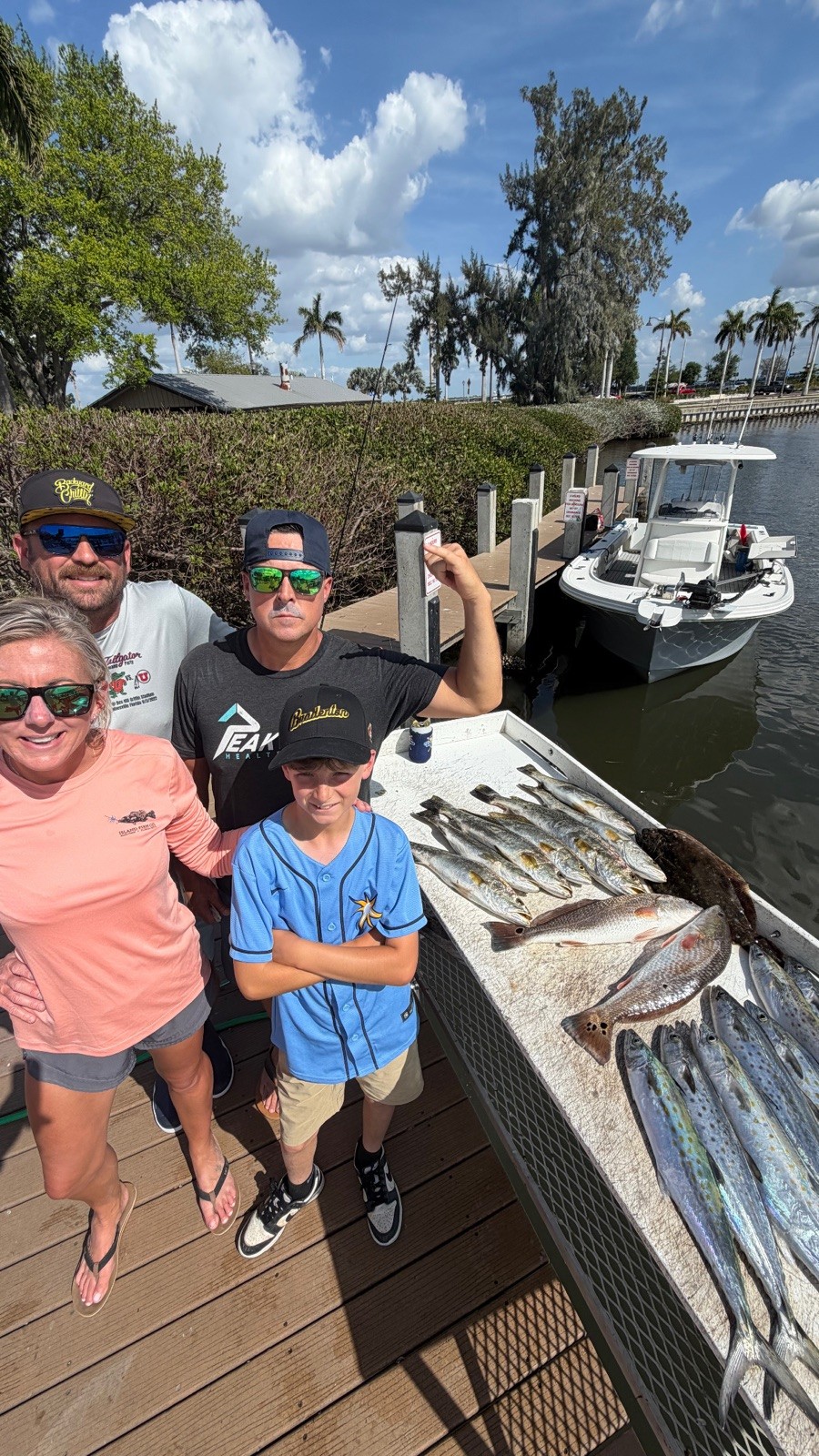
Snook fishing isn’t just for experienced anglers. Inshore snook spots are often close to the dock in sheltered water, which makes them a good fit for a family charter or a half day trip. For a child, a snook on light tackle is a fish they won’t forget.
How snook are caught
Most snook fishing is done with light spinning tackle, casting baits or lures close to structure and letting the tide carry them into the strike zone. Live bait is a common choice because snook are ambush feeders that react to anything struggling in the current. Artificial lures work too, and some anglers prefer the challenge of tempting a snook on a plug or soft plastic.
Accuracy matters more than distance. The fish are often holding a few feet from a mangrove root or a piling, and a cast that lands in the right spot gets bitten while one that lands a few feet away gets ignored. The captain will show first-timers where to aim and how to work the bait.
Handling a snook for the photo
Snook are released more often than they are kept, and how a fish is handled decides whether it swims away strongly. Keep it in the water as much as possible, wet your hands before touching it, and support its belly with one hand rather than hanging a big fish by the jaw. Take the photo quickly and get it back in the water.
When releasing a snook, hold it upright facing into the current until it kicks away on its own. A healthy fish released well will be there for another angler next season.
Questions people ask
Can we keep a snook?
Sometimes. Snook have a closed season and a strict size slot, and the rules are updated by the Florida Fish and Wildlife Conservation Commission. When keeping a fish is allowed, the captain will tell you. Many anglers choose to release every snook regardless.
Do I need a fishing licence?
No. Everyone aboard is covered under the captain’s charter licence, and rods, tackle and bait are all included.
Is snook fishing good for beginners?
Yes, with a good captain. Hooking a snook takes a well-placed cast, and landing one takes a steady hand, but beginners catch them regularly with a little guidance. Even when the snook are hard to find, the same water usually produces redfish and trout, so there’s plenty to keep everyone busy.
Looking for the best fishing charter in Bradenton for snook? Captain Charlie Tita is a Tampa Bay native who has spent more than 35 years learning where these fish live and how they move with the tide. Every trip is private, so the day is built around your group, whether that’s a first-timer’s first snook or an experienced angler chasing a bigger fish.
Booking a snook charter
Snook trips run on a private 25′ Parker centre console, priced per boat for up to six anglers, with rods, tackle, bait, ice, water and fishing licences all included. Captain Charlie Tita has fished these waters for more than 35 years. See trip lengths and booking or call (727) 331-1532 to check dates and conditions.

Call the captain
Nautical Native Fishing Adventures
801 Riverside Dr E, Bradenton, FL 34208
Free parking on site
